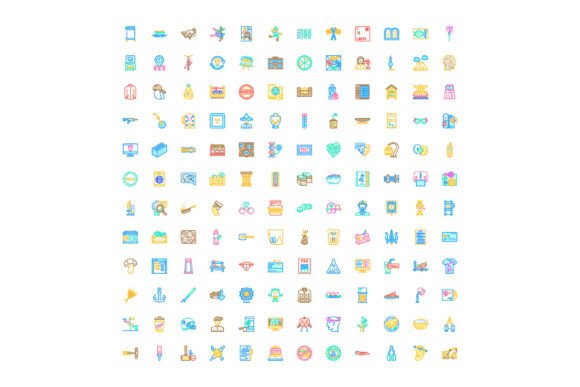
Enhancing Digital Design with a Collection of Diverse Colorful Vector Icons
In the fast-evolving world of digital design, visual clarity and user engagement are more important than ever. A well-crafted collection of diverse colorful vector icons has become an essential tool for designers, developers, and businesses aiming to create intuitive, visually appealing interfaces. These icons are not just decorative elements—they serve as universal symbols that transcend language barriers and guide users through complex digital experiences.
The Role of Vector Icons in Modern Design
Vector icons offer a level of flexibility and scalability that raster images simply cannot match. Because they are based on mathematical formulas rather than pixels, they maintain sharpness and clarity at any size. This makes them ideal for responsive web design and mobile applications where screen resolutions and device sizes vary widely.
Today’s digital designers increasingly rely on a large set of diverse, colorful vector icons and symbols to represent a broad spectrum of activities, concepts, and interface elements. From simple actions like “save” or “share” to abstract ideas like “collaboration” or “innovation,” these icons help communicate meaning quickly and effectively.
Why Diversity and Color Matter in Icon Design
As digital platforms become more inclusive and globally accessible, the need for representation in visual design has grown. A diverse icon set includes symbols that reflect various cultures, abilities, and identities. This inclusivity not only improves user experience but also aligns with modern brand values that prioritize empathy and representation.
Color plays a crucial role in this context. A colorful vector icon set can evoke emotion, highlight functionality, and create visual hierarchies within an interface. Designers can use color strategically to differentiate between categories, indicate actions, or reinforce brand identity across platforms.
How Icon Libraries Fit into Current Design Trends
Modern design trends favor minimalism, speed, and accessibility—three areas where a well-organized icon library excels. Flat design and material design principles often rely on clean, simple icons to convey meaning without visual clutter. Additionally, using vector icons reduces the need for multiple image assets, contributing to faster load times and improved performance.
With the rise of no-code and low-code development platforms, designers and non-designers alike are turning to comprehensive icon sets to streamline their workflows. These tools allow users to drag and drop icons directly into interfaces, speeding up the prototyping and development process without sacrificing quality.
Practical Applications Across Industries
From e-commerce to education, a large set of diverse, colorful vector icons serves a wide variety of use cases:
- E-commerce platforms use icons to guide users through product categories, shopping carts, and checkout processes.
- E-learning platforms benefit from icons that represent different learning modules, progress indicators, and interactive elements.
- Health and wellness apps rely on inclusive icons to depict a range of body types, medical tools, and fitness activities.
- Financial services incorporate icons to simplify complex data visualizations and transaction flows.
Each of these applications demonstrates how thoughtful icon design can improve usability and reduce cognitive load for users navigating digital spaces.
The Evolution of Icon Design: From Basic Symbols to Expressive Visual Language
Icon design has come a long way from the simple, monochrome symbols of early computing. Today’s designers are pushing the boundaries of what icons can represent, incorporating gradients, shadows, and even motion to create more expressive and engaging visuals. This evolution reflects broader changes in how users interact with technology—expecting not just function, but also delight.
The increasing demand for customizable and expressive icons has led to the rise of icon frameworks and design systems that allow for easy integration across platforms. Many of these systems are built around SVG (Scalable Vector Graphics), which enables dynamic styling and interactivity through CSS and JavaScript.
Choosing the Right Icon Set for Your Project
Selecting a collection of diverse colorful vector icons requires careful consideration of your project’s scope, audience, and design language. Here are a few key factors to keep in mind:
- Consistency: Ensure all icons share a similar style, stroke weight, and color palette to maintain visual harmony.
- Scalability: Choose vector formats that can scale seamlessly across devices and resolutions.
- Accessibility: Opt for icon sets that include alternative text and are compatible with screen readers.
- Licensing: Review usage rights to confirm whether the icons can be used in commercial or open-source projects.
Many modern icon libraries offer customization tools, allowing designers to tweak colors, shapes, and sizes to fit their specific needs. This flexibility is especially valuable for brands looking to maintain a consistent visual identity across multiple platforms.
How Businesses Benefit from High-Quality Icon Libraries
For businesses, investing in a large set of diverse, colorful vector icons and symbols can lead to tangible benefits. Improved user interfaces result in higher engagement, reduced bounce rates, and better customer satisfaction. In competitive markets, a polished, intuitive design can be the difference between a one-time visit and a loyal user base.
From a development perspective, reusable icon libraries reduce the time and cost associated with creating custom graphics from scratch. Teams can focus more on functionality and user experience, knowing that their visual assets are already optimized and ready to use.
Looking Ahead: The Future of Vector Icon Design
As technology continues to evolve, so too will the expectations around visual design. Emerging trends such as dark mode interfaces, 3D icons, and AI-assisted design tools are already shaping the next generation of icon sets. Designers can expect to see more intelligent, adaptive icons that respond to user behavior and system settings in real time.
Moreover, as global audiences become more diverse, there will be a growing demand for icons that reflect a broader range of perspectives and experiences. This shift will encourage designers and developers to think more critically about the symbols they use and the messages they convey.
Conclusion
A collection of diverse colorful vector icons is more than just a design asset—it’s a strategic tool that enhances communication, improves usability, and supports inclusive design practices. Whether you're building a mobile app, designing a website, or creating educational content, integrating a well-curated icon set can elevate your project and resonate more deeply with your audience. As digital design continues to mature, the importance of thoughtful, scalable, and expressive icons will only continue to grow.