Enhancing Design with a Diverse Collection of Isometric Icons and Graphics
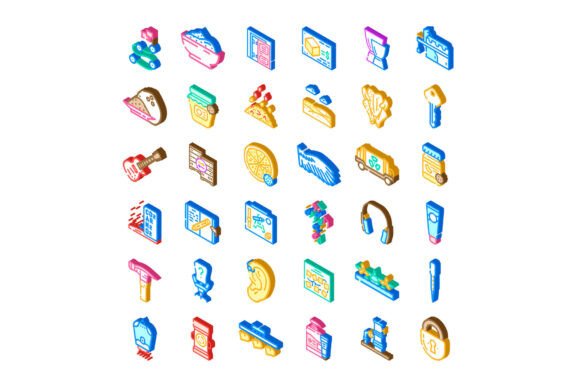
Modern web and app design increasingly rely on visual clarity and intuitive navigation. A well-curated Collection of Isometric Icons and Graphics offers designers a powerful toolkit to achieve these goals. Isometric icons, which present three-dimensional objects from a fixed angle, provide depth without the complexity of full 3D rendering. This makes them ideal for user interfaces where simplicity and visual appeal must coexist.
Understanding the Value of Isometric Design Elements
Isometric icons are more than just a stylistic choice—they’re a functional design element that helps users quickly grasp complex ideas. Unlike flat icons, isometric designs offer a sense of space and dimension, making them especially useful for representing real-world objects or abstract concepts in a relatable way.
A comprehensive Collection of Isometric Icons and Graphics typically includes everyday objects like tools, devices, and transportation, as well as conceptual elements such as data, communication, and security. These graphics are organized to support consistent visual language across digital platforms, enhancing both usability and aesthetic quality.
Challenges in Modern UI/UX Design
Designers often face several challenges when creating user interfaces:
- Visual clutter: Too many design elements can overwhelm users and reduce clarity.
- Lack of consistency: Inconsistent icon styles can disrupt the user experience and make interfaces feel disjointed.
- Slow development: Custom icon creation is time-consuming and may delay project timelines.
- Scalability issues: Some graphics lose quality when resized or adapted for different screen sizes.
These challenges are particularly pressing in fast-paced development environments where efficiency and user engagement are top priorities. Without a cohesive visual system, even the most functional app or website can fall short of its potential.
How Isometric Icon Collections Solve Design Problems
A well-organized Collection of Isometric Icons and Graphics directly addresses these pain points by offering:
- Visual consistency: Uniform perspective, color schemes, and line weights ensure a cohesive look across interfaces.
- Quick implementation: Ready-to-use icons speed up the design process, allowing teams to focus on functionality and user experience.
- Scalable design: Vector-based graphics maintain quality at any size, making them suitable for responsive layouts.
- Improved comprehension: The three-dimensional nature of isometric icons helps users interpret abstract concepts more easily.
By integrating these design elements, developers and designers can streamline their workflow while delivering polished, user-friendly interfaces.
Practical Applications Across Industries
The versatility of a Collection of Isometric Icons and Graphics makes it valuable across a wide range of digital products:
- E-learning platforms: Use isometric icons to represent courses, progress indicators, and interactive tools, making educational content more engaging.
- Productivity apps: Visualize tasks, timelines, and workflows with isometric representations of calendars, checklists, and project tools.
- E-commerce websites: Display shipping, payment, and product features with clear, dimensional icons that guide users through the purchasing journey.
- Health and wellness apps: Illustrate fitness routines, medical concepts, and wellness goals in a visually appealing and easy-to-understand format.
- Corporate dashboards: Convey performance metrics, team collaboration, and business processes with isometric data and team icons.
Each of these applications benefits from the enhanced visual storytelling that isometric graphics provide, helping users navigate and understand digital experiences more effectively.
Choosing the Right Collection for Your Needs
When selecting a Collection of Isometric Icons and Graphics, consider the following factors:
- Relevance: Ensure the collection includes icons that align with your app or website’s purpose and target audience.
- Customizability: Look for collections that offer editable vector files (such as SVG) for easy color and style adjustments.
- Compatibility: Choose graphics that integrate smoothly with your design tools and frameworks (e.g., Figma, Sketch, or Adobe XD).
- Licensing: Confirm that the icons are available under a license that suits your project’s commercial or open-source needs.
Some designers may prefer minimalistic isometric styles for sleek interfaces, while others might opt for more detailed or playful icons to create a distinctive brand identity. The key is to select a collection that supports both your current project and future scalability.
Integrating Isometric Graphics into Your Workflow
Successfully implementing a Collection of Isometric Icons and Graphics involves more than just selecting visually appealing images. Here are some best practices for seamless integration:
- Establish a design system: Incorporate isometric icons into your brand guidelines to ensure consistent use across all platforms.
- Use in combination with flat design: Balance dimensional icons with flat UI elements to avoid visual overload while maintaining modern aesthetics.
- Test for usability: Conduct user testing to confirm that isometric graphics enhance comprehension rather than distract from core functionality.
- Optimize for performance: Compress SVG files and use lazy loading techniques to ensure fast page load times without sacrificing quality.
By following these steps, designers can ensure that isometric graphics contribute positively to both user experience and overall design cohesion.
Conclusion: Elevating Digital Experiences with Purposeful Design
A thoughtfully curated Collection of Isometric Icons and Graphics is more than a convenience—it’s a strategic asset for modern designers. Whether you're building a mobile app, redesigning a website, or developing a dashboard interface, these visuals offer a compelling way to communicate ideas clearly and efficiently.
By addressing common design challenges and supporting a wide range of applications, isometric icons empower creators to build interfaces that are both functional and visually engaging. When chosen and implemented wisely, they become a cornerstone of intuitive, user-centered design—helping users navigate digital spaces with confidence and ease.