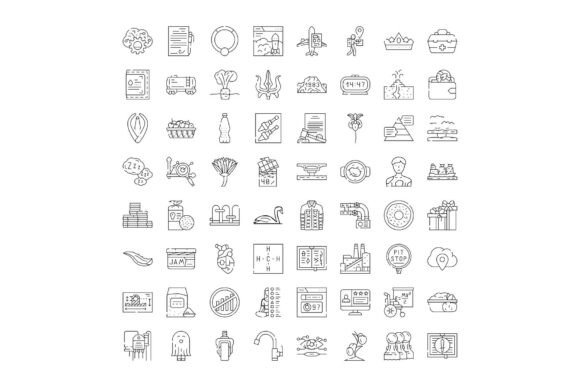
Unlocking Visual Storytelling with a Diverse Set of Linear Icons
In today's digital landscape, visual communication plays a crucial role in engaging users and conveying complex ideas quickly. A well-designed Collection of Business, Nature, and Tech icons offers a powerful toolkit for web and UI designers looking to enhance their projects with clarity and style. These icons go beyond aesthetics—they serve as intuitive visual cues that guide users, improve navigation, and enrich the overall user experience.
Why Linear Icons Matter in Modern Design
Linear icons, characterized by their clean lines and minimalistic forms, are ideal for modern interfaces where clarity and simplicity are key. Unlike filled or highly detailed icons, linear icons provide a lightweight and versatile option that scales well across different screen sizes and resolutions. Whether you're designing a mobile app, website dashboard, or educational platform, these icons help maintain a consistent visual language that users can easily interpret.
The Collection of Business, Nature, and Tech includes a wide variety of icons covering essential themes such as finance, food, education, travel, health, and natural elements. This breadth ensures that designers can find relevant icons for almost any use case without having to source from multiple libraries or compromise on design consistency.
Key Features of a Versatile Icon Set
- Scalability: Vector-based icons maintain quality at any size, making them suitable for both small mobile screens and large desktop interfaces.
- Customizability: Linear icons can be easily recolored, resized, and combined with other design elements to match brand guidelines or UI themes.
- Consistency: A unified design style across all icons ensures visual harmony throughout the interface, reducing cognitive load for users.
- Accessibility: Clear, recognizable shapes help users with varying levels of digital literacy understand functionality at a glance.
Applications Across Industries
From e-commerce platforms to health and wellness apps, linear icons are used across a wide range of industries to simplify navigation and improve user engagement. Let's explore how different sectors benefit from incorporating a Collection of Business, Nature, and Tech icons into their design systems.
Business and Finance
In business and finance applications, icons help users quickly identify key functions such as payments, reports, analytics, and user profiles. For example, a wallet icon might represent account balances, while a chart icon signals performance metrics. These visual shortcuts reduce the need for lengthy labels and make dashboards more intuitive.
Education and Learning Platforms
E-learning platforms often rely on icons to guide users through course structures, progress tracking, and interactive elements. Icons representing books, graduation caps, or lightbulbs can be used to indicate lessons, achievements, and tips. A well-organized icon set ensures that learners stay focused and engaged without being overwhelmed by text-heavy interfaces.
Health and Wellness
In health-related apps, clear and recognizable icons are essential for communicating medical or fitness-related actions. Icons for heart rate, sleep tracking, nutrition, and medication reminders help users navigate health data efficiently. Given the sensitive nature of this information, visual clarity and accuracy are especially important.
Travel and Navigation
For travel apps, icons depicting maps, compasses, suitcases, and transportation modes are indispensable. These symbols transcend language barriers, making them ideal for international audiences. A well-designed icon can indicate directions, hotel availability, or flight status at a glance—crucial for users on the go.
How to Choose the Right Icon Set
When selecting a Collection of Business, Nature, and Tech icons, several factors should be considered to ensure it aligns with your project’s goals and design philosophy.
- Relevance: Ensure the icon set includes symbols relevant to your industry or application. A general-purpose set may not cover niche functions, forcing you to mix and match different styles, which can disrupt visual harmony.
- File Formats: Look for icon sets that offer multiple formats (SVG, PNG, etc.) for flexibility across platforms and development environments.
- Licensing: Always check usage rights. Some icon sets are free for personal use but require a license for commercial applications.
- Update Frequency: Opt for icon libraries that are regularly updated to reflect new trends and emerging concepts in design and technology.
Integrating Icons into Modern Workflows
Modern design tools like Figma, Sketch, and Adobe XD support seamless integration of icon libraries, allowing designers to drag and drop icons directly into their projects. Developers can also easily implement SVG icons using CSS or JavaScript frameworks, ensuring performance and responsiveness across devices.
For teams working in agile environments, having a centralized icon system improves collaboration and reduces design inconsistencies. Design systems often include icon libraries as part of their component libraries, ensuring that every team member uses the same visual language.
Designing for the Future with a Diverse Icon Set
As digital interfaces continue to evolve, the demand for versatile, scalable, and meaningful visual elements will only increase. A Collection of Business, Nature, and Tech icons provides a solid foundation for building intuitive, user-friendly experiences across platforms and industries.
Whether you're a startup building your first app or an enterprise updating your digital presence, investing in a comprehensive icon set can save time, improve usability, and elevate your brand’s visual identity. By choosing icons that align with your content and audience needs, you create a more engaging and accessible digital environment.
Final Thoughts
Icons are more than decorative elements—they are essential tools for communication and navigation in the digital world. A thoughtfully curated Collection of Business, Nature, and Tech icons empowers designers to tell visual stories that resonate with users, streamline interactions, and enhance the overall experience. As design trends shift toward minimalism and accessibility, linear icons remain a timeless and effective choice for modern UI development.