Collecting Various Isometric 3D Objects: A Growing Trend in Modern Design
Designers and developers are increasingly turning to isometric 3D objects to enhance the visual appeal and functionality of digital interfaces. This trend is not limited to niche design circles—it's becoming a mainstream practice across websites, mobile apps, dashboards, and marketing materials. The appeal lies in how these elements blend realism with stylization, offering a unique perspective that feels both modern and accessible.
Why Isometric 3D Matters in Today’s Design Landscape
Isometric design, which presents objects in a 3D-like format without perspective distortion, has seen a resurgence in popularity. It allows for a clean, scalable way to represent complex ideas or products visually. Collecting various isometric 3D objects enables designers to build rich, cohesive visual libraries that can be reused across multiple projects without losing impact or clarity.
Unlike traditional flat icons, isometric 3D graphics provide depth and dimension, making them more engaging while maintaining simplicity. This balance is especially important as users expect interfaces to be intuitive yet visually stimulating. Brands are leveraging this style to communicate professionalism and innovation without overwhelming the viewer.
How the Trend Reflects Broader Design Shifts
As digital experiences become more immersive, there’s a growing demand for visuals that are expressive yet functional. Isometric 3D objects fit neatly into this evolution, offering a middle ground between realism and abstraction. This shift aligns with broader design trends that favor minimalism with personality, where every visual element serves a purpose beyond decoration.
- Designers are using isometric 3D icons to illustrate processes, features, and services in a visually digestible way.
- Businesses are integrating these assets into landing pages and dashboards to improve user engagement and comprehension.
- Developers appreciate the scalability and adaptability of these graphics across different screen sizes and platforms.
From Practicality to Personality: The Role of Color and Diversity
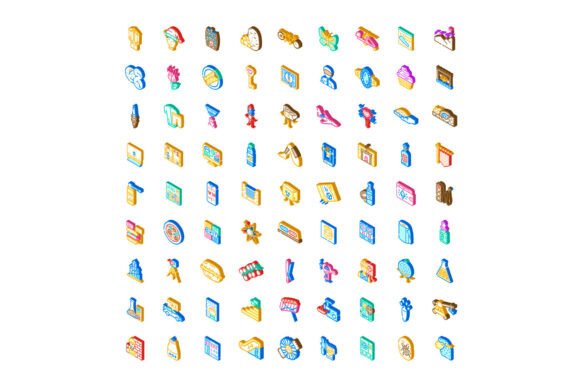
One of the most compelling aspects of collecting a diverse range of colorful isometric 3D icons is the ability to inject personality into digital spaces. These icons are not just tools—they're expressions of brand identity and tone. Whether it's a playful pastel set for a startup or a bold, high-contrast collection for a tech platform, the right color palette can significantly influence user perception.
Design teams are now curating icon sets that reflect the diversity of their audiences. This includes variations in style, subject matter, and representation. For example, a health and wellness app might use isometric illustrations of people in different postures, ethnicities, and body types to foster inclusivity and relatability.
Practical Benefits for Designers and Businesses
For professionals working in fast-paced environments, having a ready collection of isometric 3D assets can save time and maintain consistency. Here are some practical benefits:
- Speed and Efficiency: Ready-made isometric icons can be dropped into layouts quickly, reducing the need for custom illustration from scratch.
- Brand Cohesion: Using a unified set of 3D objects ensures that all visual materials maintain a consistent look and feel across platforms.
- Scalability: Vector-based isometric assets scale without quality loss, making them ideal for responsive design.
- Flexibility: These icons can be recolored, layered, and combined to suit different themes and contexts.
Evolution of the Trend: From Niche to Necessity
What was once a niche design approach used by illustrators and motion designers has now become a staple in UI/UX workflows. The rise of design systems and component-based development has made reusable, scalable assets like isometric 3D icons more valuable than ever. Tools like Figma, Sketch, and Adobe Illustrator have made it easier to create and integrate these elements, further fueling their adoption.
Moreover, the increasing use of no-code and low-code platforms has created a demand for visual assets that non-designers can easily implement. Isometric 3D icons meet this need by offering a professional look without requiring advanced design skills to deploy effectively.
Real-World Applications and Examples
Across industries, companies are finding creative ways to use isometric 3D objects to enhance user experiences. Here are a few examples:
- An e-commerce platform uses isometric product illustrations to showcase items in a stylized, engaging way without relying solely on photos.
- A SaaS dashboard integrates isometric icons to represent different features, helping users navigate complex interfaces more intuitively.
- An educational app employs colorful 3D icons to make learning modules more visually engaging for younger audiences.
These examples highlight how versatile and effective isometric design can be when applied thoughtfully. It’s not just about aesthetics—it’s about improving usability and emotional connection with users.
Considerations for Building a Strong Isometric 3D Collection
While the trend is promising, not all isometric assets are created equal. Designers and teams should consider several factors when curating or creating a collection:
- Consistency: Ensure all icons share the same lighting, angle, and line weight to maintain a unified appearance.
- Relevance: Choose objects and symbols that directly relate to your brand or the functions of your product.
- Customizability: Opt for assets that can be easily edited and adapted to different color schemes and layouts.
- Accessibility: Use high-contrast colors and clear shapes to ensure icons are readable for all users, including those with visual impairments.
Designers should also consider sourcing from reputable marketplaces or commissioning custom sets when generic options don’t align with their brand’s voice or technical requirements.
The Future of Isometric 3D in Design
As AR and VR technologies become more mainstream, the role of 3D design in everyday interfaces is expected to grow. However, isometric 3D will remain relevant due to its simplicity and compatibility with current tools and platforms. It offers a practical stepping stone toward more immersive design without the complexity of full 3D modeling.
Additionally, as AI-powered design tools evolve, we may see more automated ways to generate and customize isometric assets, further lowering the barrier to entry. This evolution will allow even small teams and solo creators to benefit from high-quality visuals that were once accessible only to large studios.
Final Thoughts
Collecting various isometric 3D objects is more than a passing trend—it’s a response to the evolving needs of digital design. As interfaces become more complex and user expectations rise, designers need tools that offer both functionality and flair. Isometric 3D icons and objects provide a versatile, scalable solution that aligns with modern workflows and aesthetic sensibilities.
Whether you're a seasoned designer or a business owner looking to enhance your digital presence, investing in a well-curated set of isometric 3D assets can make a meaningful difference. It’s not just about keeping up with trends—it’s about creating better, more engaging experiences for your audience, today and in the years to come.